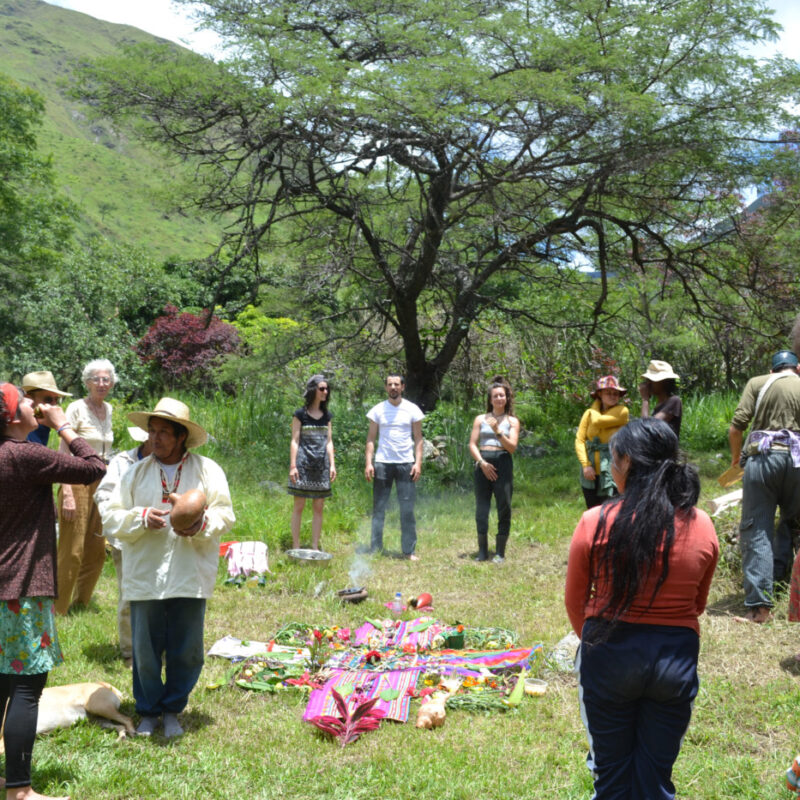
Editor’s Note: In September, a group of SEEDS pioneers and innovators will meet in Vilcabamba, Ecuador to manifest common missions, be with like-minded people, learn and work together and train the next-generation of entrepreneurs. Hosting this SEEDS Alliance journey is the author of this article, Walter Moora, his wife Susan Davis Moora, founder of the KINS Innovation Networks, and SEEDS innovator/strategist Stephen Gomes, a long-time supporter of KINS. With this convergence of SEEDS, Kinship Earth and Legacy International’s Global Transformation Corps (GTC), entrepreneurs and more in a central location comes the strengthening of a new SEEDS + regenerative ecosystem.
An Insightful Overview
In the mountains of southern Ecuador lies a small village called Vilcabamba. Here we have a very active group of social change activists, both local and foreign. Since October of 2020, we have been very active in the SEEDS community and have received four grants totaling 2,337,000 Seeds.
The river that runs through Vilcabamba eventually becomes the Catamayo River, which has its headwaters in the El Condor Biosphere Park, which includes two national parks, the Podocarpus and Yacuri, and covers an area of 2.6 million square miles. This is an important watershed because it supplies water for many downstream irrigation projects and eventually flows into both Peru and the Guayaquil Bay.
Our hope is that our efforts, supported by grants from SEEDS, can be an example too many other watersheds all over the world.
In October of 2020, we received a campaign grant of 617,000 Seeds. These Seeds are immediately available for distribution and are slowly gaining value.
Over the ensuing months, the following strategy has evolved.
It became apparent that to involve people we had to show how SEEDS can help them to fulfill their dreams. That is the specialty of my wife Susan’s lifelong work as a social investor and the innovator of KINS Innovation Networks, which helps people manifest their life missions collaboratively with others. We are successfully weaving the KINS innovative method into all our work here in Ecuador.
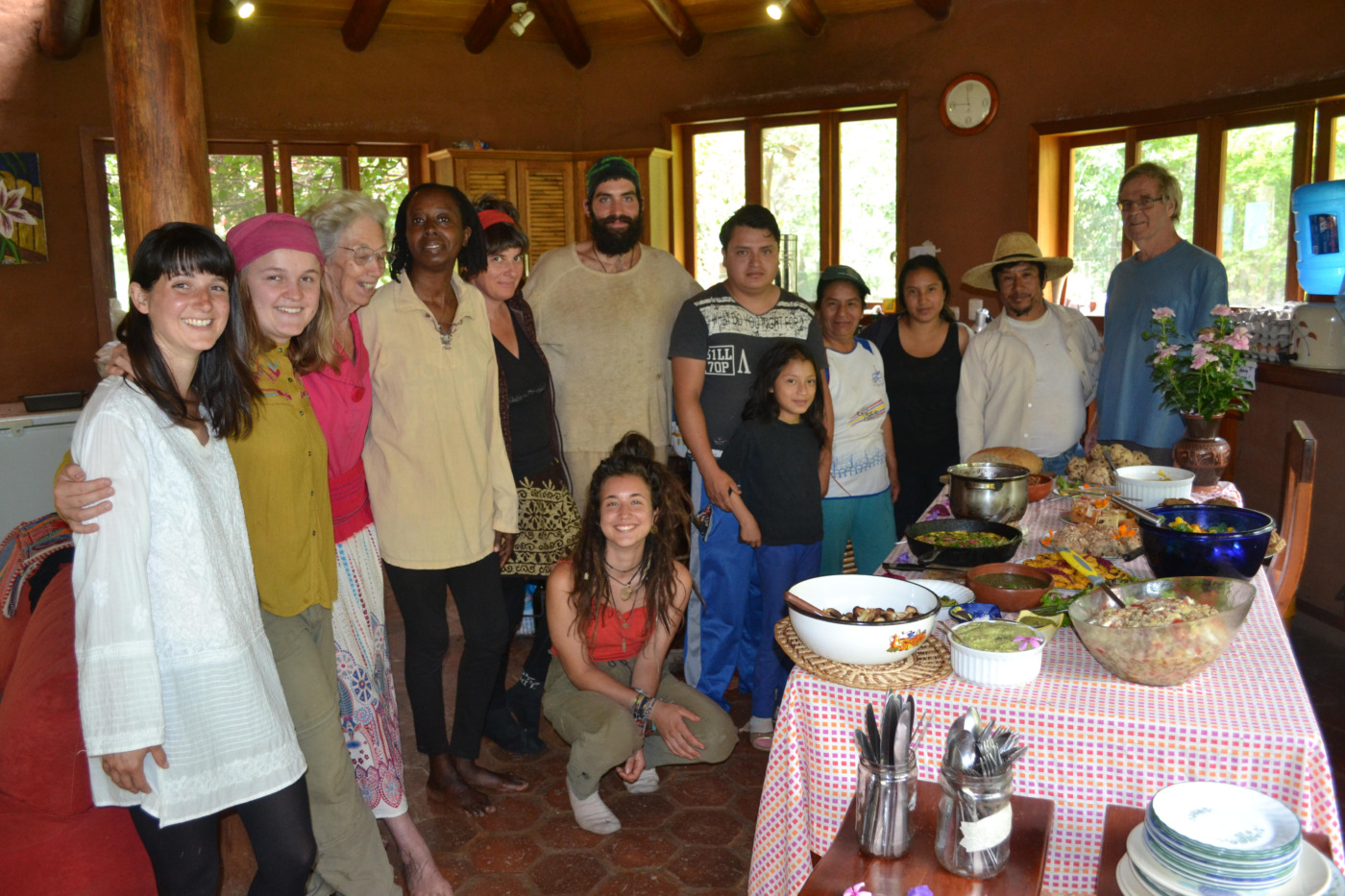 Celebrating Easter and the spring equinox of 2020 during the Covid lockdown at Finca Sagrada, Vilcabamba
To make the most of the KINS method, we need a cadre of inspired social entrepreneurs. To achieve, this we are collaborating with Stephen Gomes and the Global Transformation Corps that has a training program for social change entrepreneurs. It’s stated goal is to empower Next Generation Entrepreneurs to effectively realign our economic system from short-sighted profit maximization to generate equitable, sustainable social impact solutions.
Starting July 9th, we have asked for a campaign grant of 777,777 Seeds to support this project. Having this program here will be foundational to our success.
Most important, we needed a full-time coordinator with unique credentials. She’d have to have top environmental credentials, know the power structure of Ecuador and know who’s who in environmental innovations. Happily we have successfully hired Nancy Hilgert who has dedicated her life and work to environmental issues within Ecuador and internationally. For us, it is quite a financial challenge, as each month we have to find $2,000 to support her. We do this by finding people who are willing to exchange $2,000 for 4,000 Seeds. We take these out of our SEEDS grants.
Seeds Incentives for a New Marketplace
We are encouraging people to open Seeds passports and, as an incentive, we give them 500 Seeds. In our grants we have enough Seeds to give 500 Seeds to 500 people. We have signed up about 70 people so far, and we have given out about 70,000 Seeds.
Already we are supporting numerous people and their projects. For example, we are able to support a new community garden in Tumianuma, that sprang up out of the Covid lockdown. Many people lost their jobs and had to rely on food handouts. Now about eight women are growing organic vegetables. I am a retired Biodynamic farmer and am able to give advice on how to grow temperate climate vegetables. In addition, I am able to buy seeds and provide compost out of our SEEDS grant of 617,000 Seeds. We have spent about $200 on supplies and compost.
Further, we are talking with a group of volunteers who spend their Saturday mornings doing environmental projects. They clean the streams, develop and maintain footpaths in the mountains and along rivers and support other environmental projects. We will be supporting their work by giving each person five Seeds for every hour of their work.
In Vilcabamba, we will be supporting the organic market here. For every $1 spent, the consumer will get five Seeds. The vendor will also receive five Seeds. The average vendor receives about $70 on a Saturday at the market. To receive 350 Seeds each week will help future projects that they might have. (The average farm worker earns about $400 per month)
We will support tree planting. For every native tree planted a person will receive 15 Seeds . If they return a year later with proof that the tree is living, they will receive another 10 Seeds. We are open to proposals to support other projects too. For instance, there will be a health fair in July in Vilcabamba where alternative practices will be showcased. We will have a booth at the fair where we can sign people up.
Meanwhile, we helped a local entrepreneur apply for a Seeds alliance grant successfully. He will receive 220,000 Seeds to build a solar dehydration plant for organic vegetables that will be packaged with rice as a convenience food. This will open new markets for organic growers and make healthy food readily available.
We will be able to help others apply for grants. Seeds and it’s community really turns the world upside down. Who ever imagined that there could be an economic system that supports people and projects that make a healthy world possible.
We have several hurdles to overcome.
- The technology is still a bit difficult. Most people have smart phones but often they are older models that don’t function very well.
- Most people do not have computers.
- Most people have no English skills. This eliminates them from participating in discord, which lets SEEDS members update each other on what they are up to, or recommending English language videos that explain SEEDS.
- About a year ago, there was a bitcoin scam where people lost money on SEEDS. It is hard to convince some people that there are no strings attached to SEEDS and that it is a viable economic alternative currency.
- Vilcabamba is a small town and still has a rural background. SEEDS is based to a large extend on some pretty sophisticated ideas and these are often hard to grasp.
- We often need cash. We overcome this by offering donors two Seeds for every dollar given. We have raised about $5,000 worth of cash so far.
- Susan and I do not speak fluent Spanish. This has a positive side in that this project is very much driven by the locals.
The most positive side is that we have a great core group.Vilcabamba does attract people who support things like regenerative agriculture, watershed restoration, reforestation, no 5G, no mask wearing and are anti-vaccines.
When the local people hear about these things they often respond very positively. Being closer to the land, these ideas make sense.
Saturday Circles
Every second Saturday we have a meeting from 4pm to 6pm. We use the KINS innovation method for the agenda. We go around the circle and people describe their project or dream that they hold. Often there is synchronicity and collaboration can develop. We then go into on going projects and how we can develop them further. Our big project is preparing for our meeting in September with the Global Transformation Corps. This is a unique and inspirational method of teaching entrepreneurship to people desiring to serve Earth. We are finding thirty 18 to 35 year olds from Loja Province who would like to empower Next Generation entrepreneurs, Their goal is to effectively realign our economic system from short-sighted profit maximization to generating equitable, sustainable social impact solutions.
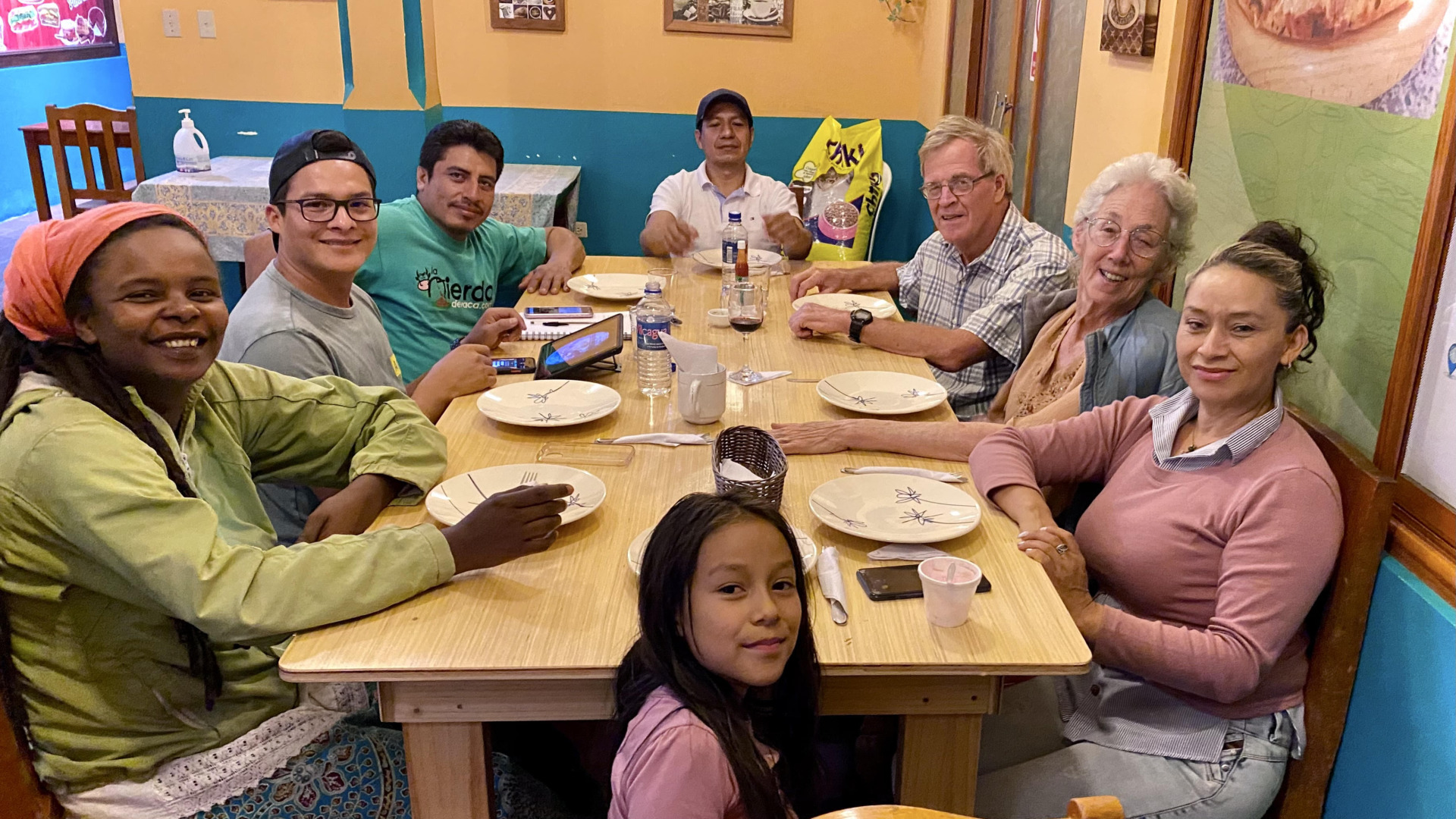
Our Saturday afternoon group enjoying Pizza after our meeting. Very often this is our most productive part of the process. People open up and bond and new ideas materialize.
Our long-term aim is that Seeds will support regenerative projects in our watershed. This will enable us to become self sufficient in as many areas as possible. Having a viable local currency that stays within the community will greatly help us achieve this goal. As Seeds gets closer to being a stable coin, people will want to start using their tokens.
A Sign of the Future
A while back, I bought $35 worth of groceries from one of the store keepers. She had a SEEDS passport and asked me to pay in Seeds. I sent her 830 Seeds. It was so simple. She was so excited. It reminded me of what we are working towards in the future.