


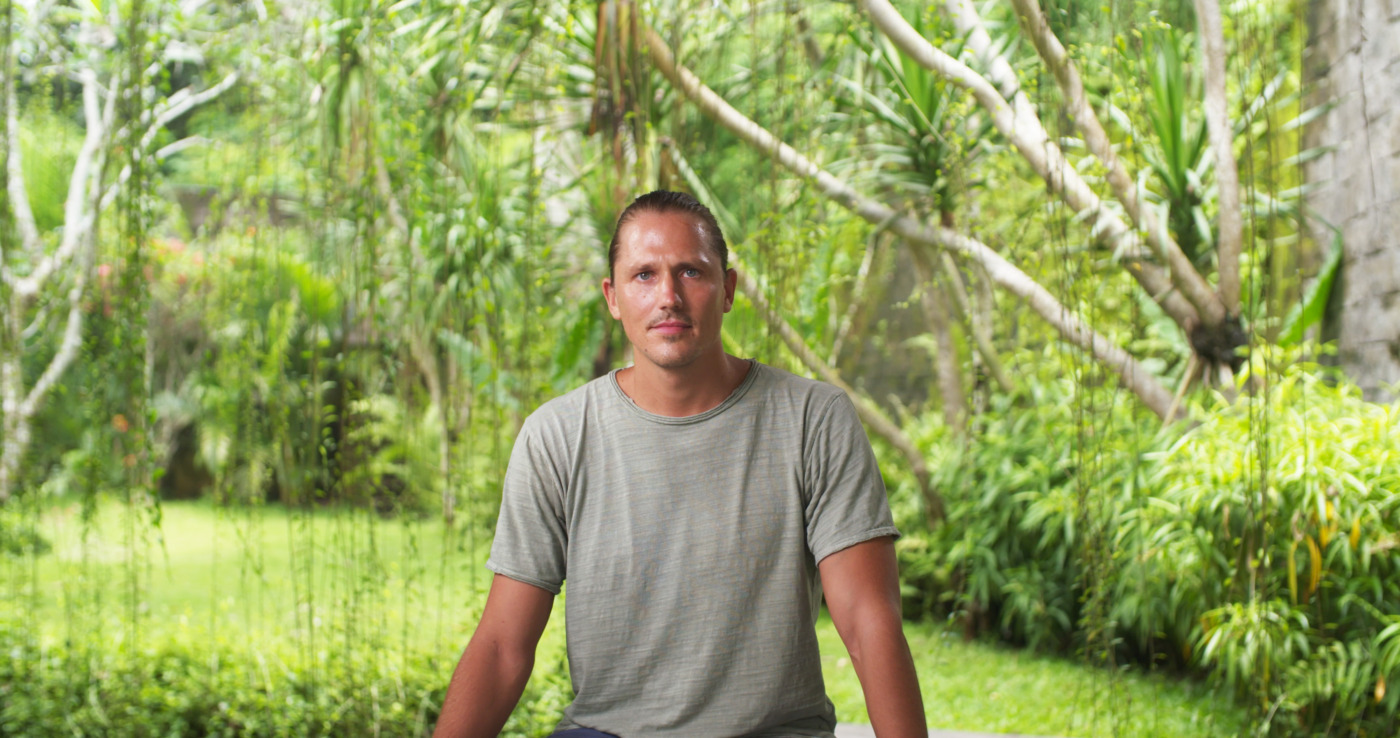
A Regenerative Renaissance: Q & A with Rieki Cordon
Why do you prefer to call this SEEDS Movement a Regenerative Renaissance rather than a Revolution?
We need it to be regenerative; if not, humanity is not going to be able to continue this experiment called civilization because our planetary ecosystem services will fail. That’s one side. The other side is we can build the most beautiful world and civilization the world has ever known. And why not? Why not make all of our rivers drinkable again? Why not live in forests full of food? You know, food scarcity is something that’s just completely absurd because there’s just food everywhere.
So, we need a Renaissance over revolution because a revolution is technically just revolving. It’s having the same power structures, but with new people in power, essentially. What’s interesting about a Renaissance is it’s a fundamental shift of the paradigm. So it’s not something that’s “us vs them”; like a revolution where the mission is often, “let’s take down the 1%.”
It’s more about rethinking how our systems are designed, and how we show up in society. We have fundamentally new technologies. We have a fundamentally different environment that humanity is operating in and we’ve never before had a global civilization.
Hypha and SEEDS aren’t here to just build a new app and get people to use it and monetize their data. We’re not interested in creating products for the market.
We are interested in serving this Renaissance and providing tools as a way to support that. What we’re also working on in Hypha is rethinking villages, and how we actually come together amongst our tribes and groups of people to serve our needs and meet our purposes in a more beautiful, organic and amazing way.
You started working on this four years ago. Why is now the right time?
From my perspective, the world was ready four years ago, and certainly longer. But there are so many converging crises that are coming together right now where, from a U.S. centric point of view – and the whole world tends to watch the United States – it’s becoming blatantly clear that our governance systems are an outright joke, if not just a circus, and that they’re in dire need of reformation. Further, we have a financial system on the brink of collapse with central banks creating tens of trillions of dollars of new money. The world is still closed from the pandemic, economies in tatters… and in a climate crisis and we have a convergence of political, environmental, economic and financial crises… I think the world is ready.
Are the people around the world ready for this?
It’s not obvious to everyone yet that our economic systems are in dire need of reformation. They’re promoting and financing and funding the destruction of our planet when climate change is going off the rails. We are seeing more intense fire seasons, more intense hurricane seasons, more rivers that are polluted and undrinkable, etc.
Every metric you want to look at in our environmental health is going down, and rapidly. So we need a fundamental shift in how our economies are designed. Also, a lot of major players in the world are trying to enforce the transition anyway. So there’s a lot of talk about introducing central bank digital currencies, which are really going to be massively control-based.
The shift is happening at these institutional, highly-controlled- levels, what does Hypha and SEEDS offer that is an alternative?
A lot of “business leaders of the world,” through the world economic forum are talking about this great shift – a new normal – and helping people step into a different type of economics and governance system, powered by them. So that shift is taking place.
But through Seeds, what we’re trying to offer is more freedom, more abundance powered by the people for the planet, rather than powered by the corporations for profit. So since that shift is already taking place, I think it’s a really beautiful time to come in and offer an alternative.
We always say capitalism is the worst economic system that we’ve ever thought of, but it’s the best thing we have right now. It is the same thing with democracy. It’s a terrible way to make decisions at scale, but it’s the best thing we’ve got; so that’s always the scapegoat, and the fallback.
I think that’s no longer true. That’s why we are presenting an alternative. Let’s try to make it easy and joyful and rewarding. That’s really been our mission here.
You recently began to talk more about United Planet. What is Hypha doing with this larger alliance?
It’s kind of like an evolution of United Nations. Because with this Renaissance we’re moving beyond the concept of the nation state. I know, everyone feels like a fish in water, where a nation state just feels like the way things are. But nation states are relatively new, as far as humans are concerned. And what I mean by nation state is like US, Canada, Germany, etc. So instead of the United Nations, we’re talking about a united planet. Like we’re not thinking in terms of nations anymore, we’re thinking in terms of people and communities on our planet. So what it looks like is having ambassadors from all the different movements, all the different projects, all the different communities that are serving this transition, and then they send their ambassadors to this United Planet.
How is United Planet redefining global sustainable development goals?
We come together to first support the Sustainable Development Goals, but we’re remapping; I’m calling them the regenerative development goals. One example is no hunger, but no hunger is an interesting one. If we feed people a bunch of artificial sugar, and processed GMO, wheat, that’s going to get them sick. Well, they’re not hungry, but they’re getting cancer. So we don’t want “no hunger”; what we want is abundant, thriving, organic, regenerative food for every person on our planet, and a healthy ecosystem.
We kind of transformed the Sustainable Development Goals, because we’re not really trying to sustain the system into the regenerative development.
How is this impacting how you show investors benefits and impacts.
You might have 50 organizations supporting and creating a regenerative development goal. And now what we’re doing is we’re creating an index fund to be able to finance these projects. So what we really want is to be able to go to an investor and say look, you want to invest in change, but you don’t want the risk that comes with really investing and change. Because if you invest in one startup, the risk is really high. But if you invest in 100, startups across the board, the average return on investment with 100 startups is about 27%, which is higher than you could get with some tech investment fund managers. So if we can create an index fund, where instead of investing into one startup, you can invest in 100 startups or 1000 startups or an entirely different civilizational model. We’re drastically reducing the risk of you losing your investment, and we’re increasing the upside. So what that looks like is United Planet actually coming together to first determine the projects that are joining it to make sure that they’re providing a vital piece of this story.
We’re already vetting all the different projects and movements and organizations that are coming into this alliance. Then an investor knows all these projects have been vetted, their use case has been proven, and they are going to get a higher return.
How do you think this alliance will evolve?
We think that’s a really powerful concept to be able to plug in this movement so that we can actually invest in a whole systems change and support all the projects that are doing it at the same time. Then we bake in things like decentralized governance. Then the investor comes in and says, “Hey, I want to give 100 million to United Planets.” That goes into the United Planet fund. And then all the projects and people that are part of United Planet get to collectively decide what we do with this hundred billion.
We start using this collective wisdom to decide how we move as a whole. We can move out of competition, where it’s like my startup versus the world, and we start thinking more collectively, like, okay, we’re part of this transition, we’re part of this Regenerative Renaissance, creating a regenerative civilization, and now we’re moving as a whole towards that meta game. So we can start thinking on a higher order of cooperation here and how we start doing that. So really, with Hypha and SEEDS and all of this we’re building, we want to be a bridge from the old world, the incentives that work there, and talk the language of investors and high returns and reduced risk, all while supporting this transition in a way that makes sense for people and planet and where we’re headed.
Through the DHO, Hypha is creating a whole new game for decentralized organizational structures. It’s a great experiment. How are community members learning to steer away from traditional, workplace behaviors? What are you personally learning about yourself through this decentralized holonic governance?
One of my biggest lessons is….trusting in the process and trusting in the game. A lot of my ‘traditional leadership’ training comes from the military. I spent about six years there learning how to, quote, ‘lead people and control them’.
My biggest learning lesson so far has been unlearning that style of leadership to make room for a new one that’s more focused on inspiration, holding the space and creating the container where people may thrive, and where they want to show up and produce to create and build rather than being forced through any method of coercion to do so.
There have been about four different occasions where I was very strict with someone, saying (to them) I really don’t think we should do that and that’s my opinion. They did it anyway. After they did it, I realized we definitely needed it and I said thanks so much for doing this!
I’ve had so many of those humbling experiences where tapping into that collective wisdom and letting it happen, rather than trying to hold on to control, was just incredible for my growth. Probably my biggest takeaway is to trust the process. Trust that the collective wisdom really does know what’s going on if we empower and cultivate it in the right way and trust in that process.
Have you found that you need to bring people around you – experts – who can help build the organization, such as organizational development coaches and systems architects?
Definitely. It’s been really important that the DNA of this is really attuned to what the purpose is and what the vision is. Fortunately, it’s already been that way. It’s been kind of like a beacon in attracting those types of people and those personalities really early on. And we’ve been really good at filtering it because of the self-organized structure. People have to be pretty self-directed and knowing what the structure is like in order to be able to add value, because there is nobody there telling people what to do and how to do it.
I fundamentally believe that what’s happening right now with this shift is more of a vibrational shift tapping into a lot of people. You can think of us being like radio receivers in the way that we’re all tuning into a different type of channel. Almost everyone in Hypha actually has shown up and had this similar vision of being called to do something like this. I feel like this movement is the one that I’m being called to. I have this piece of the puzzle to play. And I’m really excited.
And that’s the other really, really exciting part and why Hypha and SEEDS have grown so quickly; people have already been working on their pieces – for some of them it’s been decades. All the people who are getting this calling to build a different culture can come in, plug in how they’ve been working on it, start synchronizing with other people and focus on their zone of genius, rather than trying to do it all. I think that the filtering process has been working pretty organically and naturally, so far, and maybe that’s just a cause of trusting the process that these synchronicities tend to happen that way.
When did you realize that self-organization needed to be part of the Hypha game?
Decentralization is important on so many levels. The game we’re playing, talking about creating a new civilization and replacing the nation state, that’s a really powerful game. And unfortunately–and maybe this isn’t true, and I’m hoping that this isn’t true– there are some people that may not want to be part of that transition, or maybe they don’t want that transition to happen. And some of these people are very powerful people. So from a very pragmatic and practical stance, everything SEEDS and Hypha is doing needs to be decentralized the same way Bitcoin is, where it can’t be shut down. Where there’s no one to go after; there’s no one to lock up and put in jail and say turn it off. We needed to make sure no one was actually in the driver’s seat, so that there’s no one to coerce or influence and manipulate. So that’s on the pragmatic, defense side. But on the more beautiful side of this, it needed to be powered by the people. We couldn’t have one person holding that much authority, because ultimate power ultimately corrupts.
You see it with every startup with the best intention, even potentially. In a very practical sense, we need to make sure that this is being run by the people so that there is no core group that’s making all the shots. It’s being decentralized out. Everyone has a say in how this operates, and we think that’s the way of the future.
You have to fundamentally shift how you’re having that conversation with people.
300 years ago, it was impossible to have a collective wisdom. It was impossible to actually do direct democracy because we didn’t have the Internet. We didn’t have direct forms of communication. So if we wanted to do direct democracy at scale, what were we going to do? Have everyone ride 13 days to a Coliseum and then shout on the stage? It didn’t make sense.
It did make sense to have representatives for your community. Representative democracy kind of made sense back then. Now at scale, we know it doesn’t make any sense. Our representatives don’t actually represent our interests. They kind of represent the interests of their stakeholders, i.e. the wealthy, and the corporations, etc. The way we want to evolve beyond all of the structures of governance is to flatten it…to make sure all of the stakeholders, that includes the planet, have a say in how these systems are operating.





“I fundamentally believe that what’s happening right now with this shift is more of a vibrational shift tapping into a lot of people.”
Is what JUST happened to me at the EXACT time of the Helios’ Breakfast and Blockchain interview on 3/11/22. I thought I was coming up with a novel idea and then BAM! 2 days later, I found the interview and then it all made sense.
I am part of this movement that has been culminating my whole life.
Now, how best to become involved?